This course will analyze the methods and roles of news media and news makers at the Rio 2016 Olympic Games! The Olympics represent the pinnacle of global athletic performance, and they also require the highest level of performance from the professional communicators who support them. This program places sports communication in an Olympic context, studying media and professional communicators working at the games. This includes broadcasting networks, print and online media organizations, social media, government organizations, Olympic committees, non-governmental organizations (NGOs), sports federations, and sponsors. During the spring semester, students will study the Olympic movement, learning about the standards, discipline, protocol and precision required of all participants. Multimedia production is another main theme of the course, with an emphasis on the management, leadership, and teamwork required to succeed in a fast-paced digital storytelling environment. Traveling abroad in August 2016, faculty and students will be in the field producing real stories in Rio de Janeiro, the city of the games. Working in groups, students will explore the city, producing multimedia stories researched during the spring semester. Student groups will interview people connected to the Olympics and to the Southeastern United States on video, edit the stories in Rio, and collaborate with regional news organizations in the U.S. Activities may also include meetings with sponsors and agencies, and tickets to an athletic event. The course is led by Joe Cornelius, Visiting Assistant Professor of Digital Media Production in the Knight School of Communication, and Bob Page, Knight Editor and Advisor to Student News Media. Page led global communication programs for Olympic sponsors in Torino 2006 and Beijing 2008, and developed a student program in Beijing 2008. This course may be most appropriate for students interested in sports communication, media production, sports reporting, and crisis communication and issues management. Students should be comfortable traveling in a city in a small group and working at a fast pace. To participate, students should already have taken or must commit to taking COMM 210: Intro to Digital Media Production in the 2015-2016 academic year. Students must be physically and emotionally prepared for long hours and challenging assignments. This program requires a commitment to integrity, discipline, and safety. The academic courses associated with this program are COMM 398 and 399: Sports Communication and Media Production at the Olympics for 4 total credits. This is a SELECTIVE program. Note: this course travels in August. *Itinerary and planned activities subject to change.*
Quick Facts
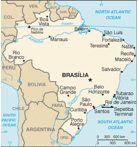
Population: 205716890 Capital: Brasilia Per-capita GDP: $ 11900 Size: 8514877 km2 Time Zone: (GMT - 03:00 hours) Brasilia
US State Department
Travel Warning: YES See : Country Specific Info.